
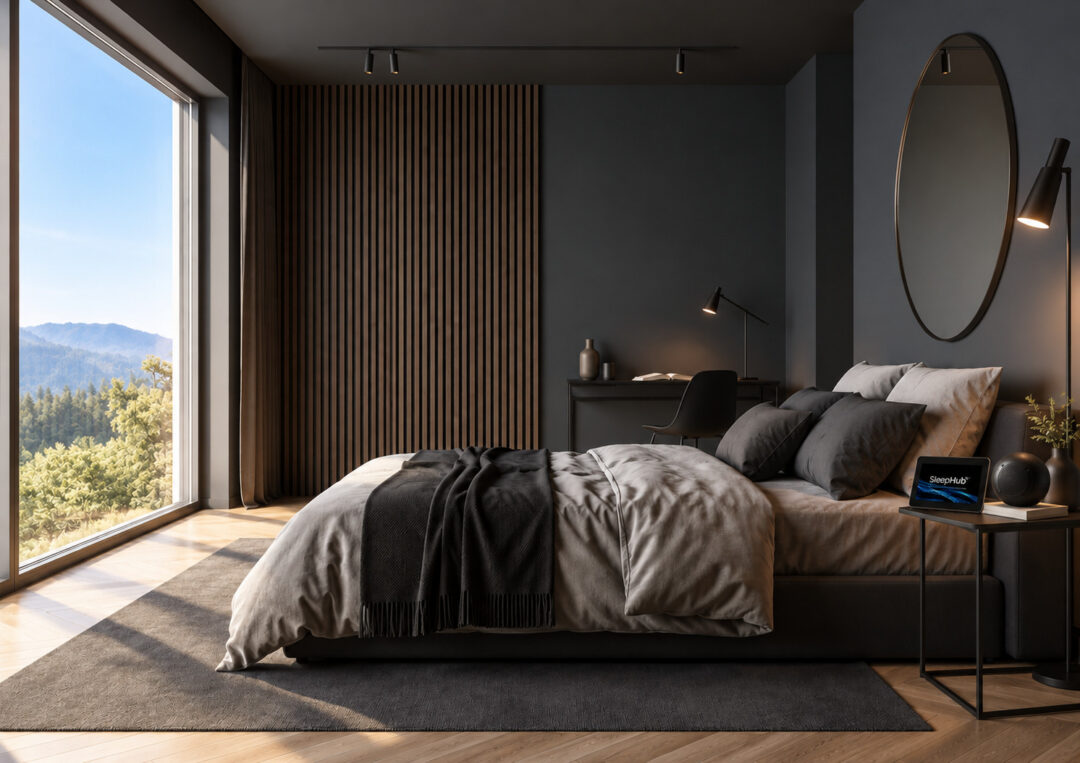
5 bedroom decisions that can influence how we sleep
A bedroom is more than a place to put a bed. It is a place for sleep and the way that environment is designed can influence how easily we settle, stay asleep and feel in the morning.
From the amount of light that enters the room to the materials we sleep against, small design decisions can make a meaningful difference.
Here are five things worth considering when designing a bedroom for better sleep:
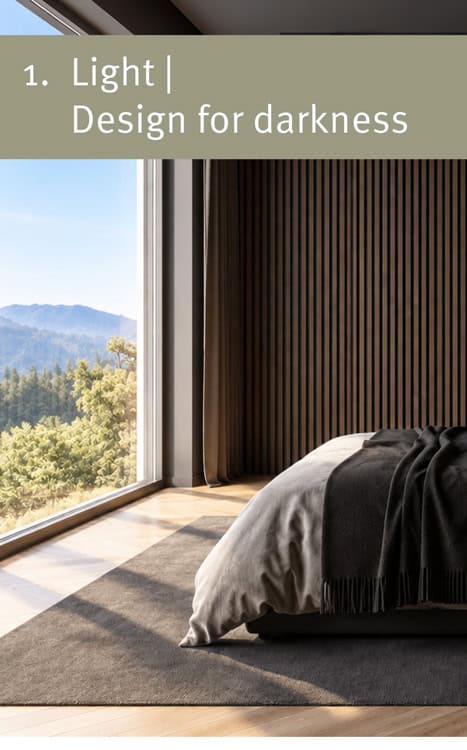
Light is one of the strongest signals controlling our circadian rhythm — our internal body clock. Bright light during the day helps us feel alert, while reducing light in the evening helps prepare the body for sleep.
For designers, this makes window treatments more than an aesthetic choice. Consider how much external light enters the room at night, as well as the placement and intensity of bedside and decorative lighting.
Design thought: Can the room transition from bright and active to soft and resful as the day changes?
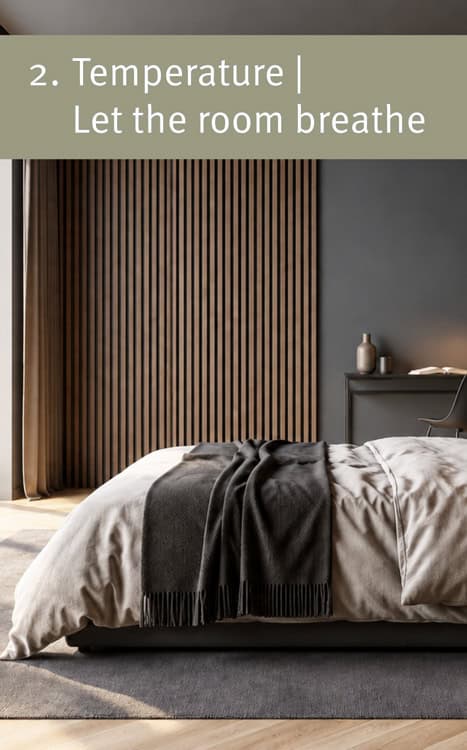
Our core body temperature naturally drops as we prepare for and enter sleep. Bedrooms that are too warm can make it harder to fall asleep and can contribute to disrupted sleep.
Temperature is therefore both an architectural and furnishing consideration. Ventilation, airflow, window placement, shading, bedding and the materials used throughout the room can all contribute to thermal comfort.
Design thought: A beautiful bedroom isn't necessarily a comfortable bedroom if it can't manage heat and airflow.
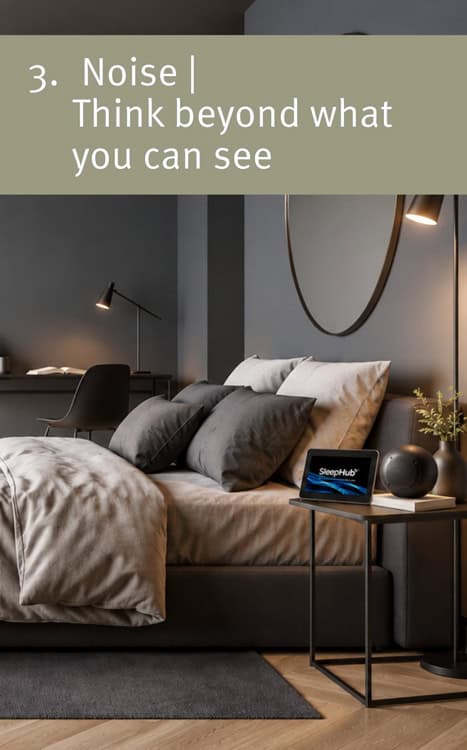
A bedroom can look completely peaceful while sounding anything but peaceful.
Traffic, neighbours, appliances, plumbing and household activity can all become sources of nighttime noise. Research has linked higher bedroom noise levels with reduced sleep efficiency, while sudden or disruptive sounds can cause brief awakenings or shifts into lighter sleep.
Acoustic considerations can therefore be just as important as visual ones. Soft furnishings, rugs, curtains and thoughtful spatial planning can all play a role in managing sound within a bedroom.
Design thought: What will this room sound like at 2am?

We spend roughly a third of our lives asleep, so the materials closest to the body deserve some thought.
Bedding and sleepwear materials can influence thermal comfort and the way heat and moisture are managed. A recent systematic review found that fibre type can affect sleep through its influence on body temperature and comfort.
For designers, this means looking beyond the visual appeal of a fabric. Texture, breathability, moisture management and how a material feels against the skin can all contribute to the overall sleep environment.
Design thought: Don't just ask, "Does it look good?" but also "How will it feel at 3am?"
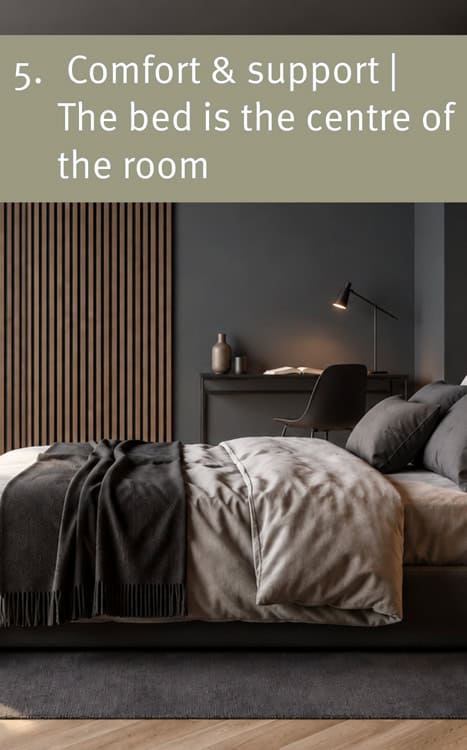
Of course, the most important piece of furniture in the bedroom is the one we spend the night on.
A mattress and pillow should provide appropriate comfort and support for the individual, their body and their preferred sleeping position. There isn’t one mattress or pillow that is right for everyone — personal comfort matters.
From an interior design perspective, the bed shouldn’t simply be treated as another piece of furniture. Its size, height, position, access from both sides and relationship to lighting, storage and circulation can all influence how functional and comfortable the room feels.